The society hosts monthly public lectures presented by industry or academic experts in the Whittle Theatre at the Cody Technology Park. There is a small charge for non-members to attend these public lectures.
We also host smaller, more informal presentations for members at the Observatory as part of our basic astronomy sessions (see the calendar for details), ad hoc observing sessions, drop-ins for member discussions and our CARS (Cosmology, Astronomy & Rocket Science) programme.
All of the meetings are free to members.
Important note - for those members who do not have a site pass:
It is now essential that you pre book 48hrs ahead for all events due to the change in site passes and bring a form of ID when you attend (photo driving license or passport) without a booking you will unfortunately not be able to attend.
Forthcoming Lectures and Events:
Every 1st and 3rd Thursday except where lectures are on same day
7:30pm - The Observatory
Club Night
Our regular evening club night is now extended to include the 1st and 3rd Thursday of the month,. This is an evening session to meet up, chat, discuss astronomy and any other areas of interest. You can bring in your equipment and compare the size of the telescopes and potentially maybe even observe objects in the night sky - weather permitting of course.
Please note that lectures will always take precedent.
Please see the calendar and calling notices for up to date information.
It’s a great opportunity to meet and get to know new members of the society and also to help each other out with the technical or equipment issues we’ve all encountered.
We do offer a lunchtime drop in on the other Thursdays, but please drop a line to Phil or John if you are coming.
Due to changes mentioned above this will now need pre-booking by non-pass holders.

Thursday 22nd October 2026
7:30pm Whittle Theatre
Bursts, bangs and things that go bump in the night!
Professor Dame Jocelyn Bell Burnell - University of Oxford
In this talk Professor Bell Burnell will describe the relatively new field of ‘transient astronomy’ which focuses on short-duration events such as flares and explosions.
Due to changes mentioned above this will now need pre-booking by non-pass holders.
Tuesday 10th November 2026
7:30pm - The Observatory
CARS #39 - Cosmology, Astronomy & Rocket Science
CARS are informal gatherings to watch videos related to cosmology, astronomy, rocket science and other topics of mutual interest, and to chat about them.
As ever space is limited please book your seat as soon as practical.
There are only 20 seats so please book early with Phil. Please click here to reserve your place.
Tuesday 17th November 2026
7:30pm ZOOM Lecture
Listening to Einstein’s Universe: the Dawn, and Exciting Future, of Gravitational-Wave Cosmology
ZOOM LECTURE
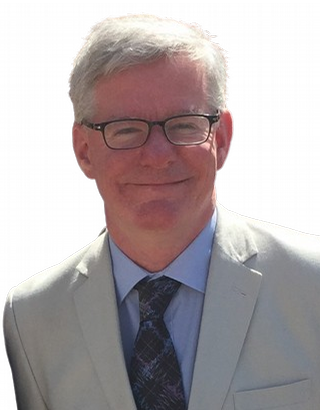
Prof Martin Hendry - University of Glasgow and LIGO Scientific Collaboration
Gravitational waves are ripples in the fabric of the cosmos predicted by Albert Einstein more than 100 years ago and produced by some of the most extreme phenomena in the universe: exploding stars, colliding black holes, even the Big Bang itself. To detect them has required the construction of the most sensitive scientific instruments ever built: giant laser interferometers capable of measuring tiny changes in the curvature of space, less than a millionth millionth the width of a hair. Such technology may sound like science fiction, yet these remarkable instruments are now routinely detecting the spacetime ripples from colliding black holes billions of light years from the Earth.
Join University of Glasgow astronomer and "black hole hunter" Professor Martin Hendry for a whistle-stop tour through the new field of gravitational-wave astronomy: the ground breaking discoveries being made, the remarkable engineering and technology that has enabled them, and how they are helping us to tackle some of the biggest mysteries of Einstein's universe.
Martin Hendry is Professor of Gravitational Astrophysics and Cosmology at the University of Glasgow, where he is also Clerk of Senate and Vice Principal of the University, having previously been Head of the School of Physics and Astronomy between 2012 and 2020. His main research interest are in gravitational-wave cosmology, and the use of the mergers of black holes and neutron stars to measure the expansion rate of the Universe. He is a senior member of the LIGO Scientific Collaboration: the global team of more than 1500 scientists who, with their colleagues in the Virgo Collaboration, made the first ever detection of gravitational waves - a discovery awarded the 2017 Nobel Prize for Physics. Martin is a Fellow of the Institute of Physics and is also a Fellow (and currently Vice-President) of the Royal Society of Edinburgh – Scotland’s National Academy. In 2015 Martin was honoured to receive an MBE in recognition of his services to the public understanding of science.
Note this is a ZOOM lecture - details will be passed on by Phil/John closer to the date.
Previous Lectures and Events:
Tuesday 6th October 2026
7:30pm - The Observatory
CARS #38 - Cosmology, Astronomy & Rocket Science
NOTE change of venue for this month to the Whittle theatre.
CARS are informal gatherings to watch videos related to cosmology, astronomy, rocket science and other topics of mutual interest, and to chat about them.
As ever space is limited please book your seat as soon as practical.
There are only 20 seats so please book early with Phil. Please click here to reserve your place.
Thursday 24th September 2026
7:30pm Whittle Theatre
Supernovae: How to stars explode, and why should I care?
Dr. Phil Wiseman - University of Southampton
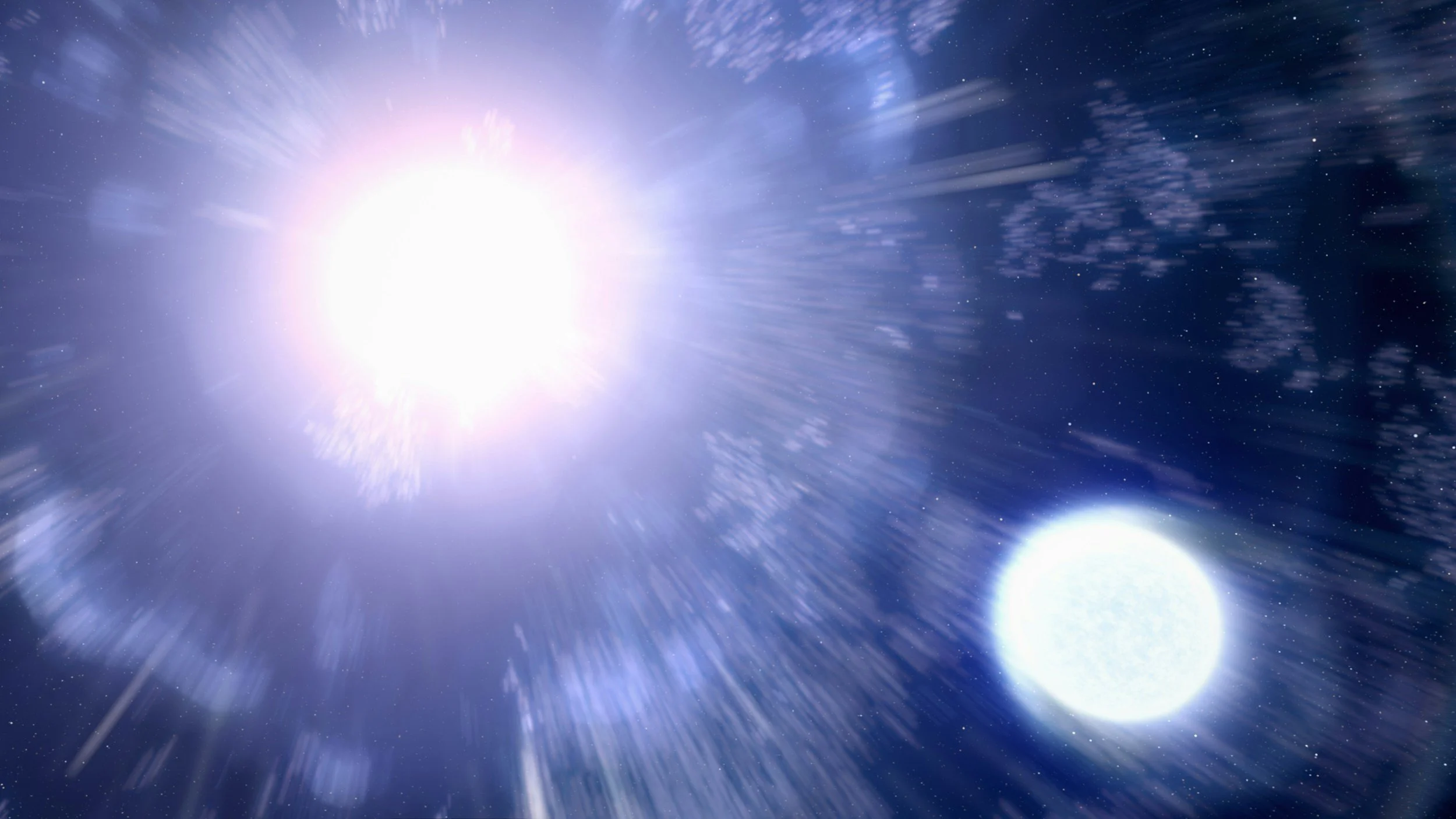
Every second, somewhere in the Universe a star explodes. These supernova explosions are the violent culmination of stellar lives and shine as bright as entire galaxies.
In this talk, Phil will take us through the cosmic journey of supernovae: how does a star come to explode, what can that tell us about galaxies, and how do we use supernovae as tools to study the most mysterious components of the Universe, dark matter and dark energy?
The talk will span millennia of scientific progress, with historical observations from ancient astronomers right through to the giant modern telescopes such as the Rubin Observatory and James Webb Space Telescope.
Dr Phil Wiseman is an research fellow in astronomy and astrophysics at the University of Southampton. He gained his undergraduate Masters degree from Durham University, before achieving a PhD at the Max-Planck-Institute for Extraterrestrial Physics in Garching bei München, Germany. After completing his PhD, Phil moved to the University of Southampton as a post-doctoral research fellow where he has remained, and in 2024 was awarded a prestigious Ernest Rutherford Fellowship from the Science and Technology Facilities Council.
His research interests revolve around the changing Universe: stars exploding, and supermassive black holes feeding on gas and stars in the centres of galaxies. Some of his notable recent work include the discovery and analysis of the most energetic single cosmic event ever witnessed, AT2021lwx, as well as leading paper alongside Nobel laureates Adam Riess and Brian Schmidt rebutting claims around the nature of dark energy
Due to changes mentioned above this will now need pre-booking by non-pass holders.
Wednesday 12th August 2026
Open to visitors from 17:45
at the Observatory
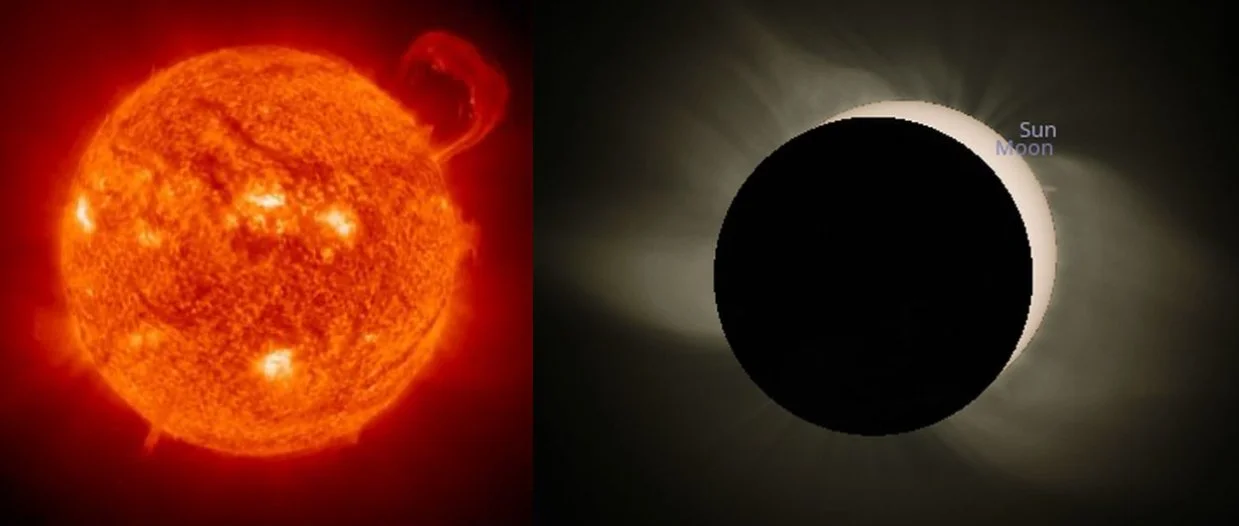
Weather permitting It is planned to open the observatory from around 16:30.
First contact: 18:17, maximum 19:13, Last contact 20:06
The eclipse should be fully visible from the observatory.
The Society plans to offer several ways to safely view the eclipse.
-
Please do not park at the observatory as space is limited.
There is room to park on Range Road
-
Various activities are planned:
The Zeiss with projected image
The Zeiss bore-sighted 500 mm cat lens will be available (solar filter required TBA). A T2 adapter compatible with camera is needed.
The Solar viewer will be set up
Questar 4” will be set up in solar mode
John H, Peter R, Chris M, Ants and Howard are planning on bringing various types of equipment.
-
This is a session open to anyone from the Cody site. You will be responsible for your own passes and are reminded that while we make reasonable health and safety measures it is not an office environment and visitors should take care. Anyone visiting is asked to email info@codyastrosoc.co.uk so we can gauge numbers.
Partial Solar Eclipse (>91%)
(With the added bonus of the Perseid Meteor Shower. Dark from ~22:00)